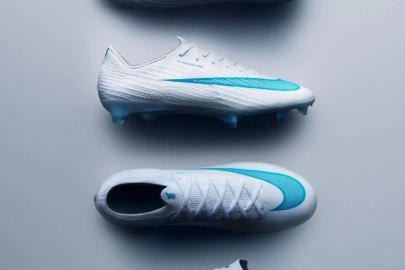
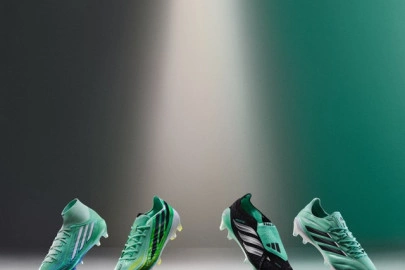
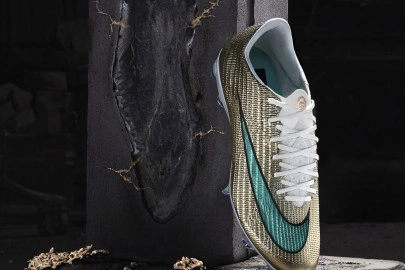
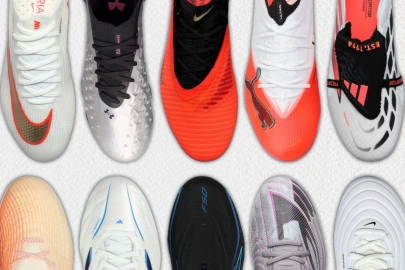
Football is evolving and adapting to the changing times. Proof of this is that we are seeing more and more artificial turf pitches at clubs and stadiums around the world. Thanks to new technologies and the latest generations of artificial turf, playing on synthetic surfaces is becoming increasingly widespread and has become common practice in many countries. In fact, we can already see this type of surface in international matches, such as those played by Andorra at home, or in competitions such as the MLS. These are just two examples of a trend that continues to grow. In light of this development, brands are increasingly developing specific products for playing on artificial turf. However, choosing the right studs can be a source of confusion. That’s why, in today’s article, we’re going to clear up any doubts and explain what type of studs you should choose for playing on artificial turf pitches.

Turf sole - Nike Tiempo Legend VIII Pro Turf
This was the first sole designed for playing on artificial turf pitches. Brands began developing this type of footwear to adapt to the expansion of these surfaces and the gradual disappearance of clay pitches. One of the main features of this type of footwear is that it resembles a trainer more than a conventional football boot. Both Turf boots and trainers tend to have a slightly higher profile around the heel, where they incorporate additional cushioning to absorb impacts – something essential on the surfaces for which they are designed. Their outsole, comprising a multitude of small rubber studs, is designed to distribute impacts more effectively and provide good grip on artificial turf.
Recommended for: first- and second-generation artificial turf pitches
Also suitable for: worn third-generation artificial turf pitches
Avoid: natural grass pitches

AG sole - adidas X 19.1 AG
There are several options within the AG range. In fact, Nike offers two types of AG outsole: the standard version and the AG-Pro, designed for its professional range. As the construction of Nike AG-Pro outsoles is similar to that of adidas’s professional-range AG outsoles in terms of functionality, we will use the outsole of the adidas X 19.1 AG as a reference. In this case, a new plate is used, the main feature of which is its lightness. The studs also differ from those on Turf soles. Instead of incorporating a multitude of small, semi-conical studs, AG boots feature studs of different shapes depending on the brand, distributed at key support points, such as the metatarsal area and the heel. We can also see that the back of these boots is higher than that of Turf-soled boots. This raised design is intended to improve performance without causing discomfort to the Achilles tendon. All of this is designed for playing on third- and fourth-generation artificial turf pitches, which have longer fibres and a feel increasingly similar to that of natural grass.
Recommended: third- and fourth-generation artificial turf pitches
Also suitable for: worn third-generation artificial turf pitches
Avoid: natural grass pitches

MG sole - Puma Future 4.1 MG
We conclude this overview of artificial turf studs with one of the brands’ most recent innovations: the MG (Multi-Ground) stud, designed to deliver good performance on different types of surface. This stud features a new synthetic plate that reduces the weight of the boots without compromising on key elements, such as the stabilising bars located on the instep, which help to reduce the risk of injury. One of its key strengths is its versatility, as it is designed to deliver good performance on artificial turf pitches. Boots with Multi-Ground soles provide good grip on synthetic surfaces and help reduce the discomfort that studs can cause on the sole of the foot. On these types of surfaces, the studs do not penetrate the ground as they would on natural grass, but instead rest on top of it. This can put pressure on the sole of the foot and cause discomfort. Thanks to the distribution of its numerous studs, the MG outsole spreads this pressure more evenly across the entire contact area, reducing discomfort.
Recommended: first-, second- and third-generation artificial turf pitches
Also suitable for: dry fourth-generation artificial turf pitches
Avoid: natural grass pitches

These are, without a doubt, the most suitable studs for playing football on artificial turf, regardless of the pitch’s generation. Finally, here at Fútbol Emotion we would like to remind you that, for safety reasons and to ensure the material’s performance, we do not recommend using boots with FG (Firm Ground) studs on artificial turf pitches of generations prior to the fourth. It is also worth bearing in mind that fourth-generation artificial turf pitches are a relatively recent addition to the world of football and that their availability remains limited. At present, they can be found in some parts of Eastern Europe and North America, where extreme weather conditions make it necessary to use this type of surface.