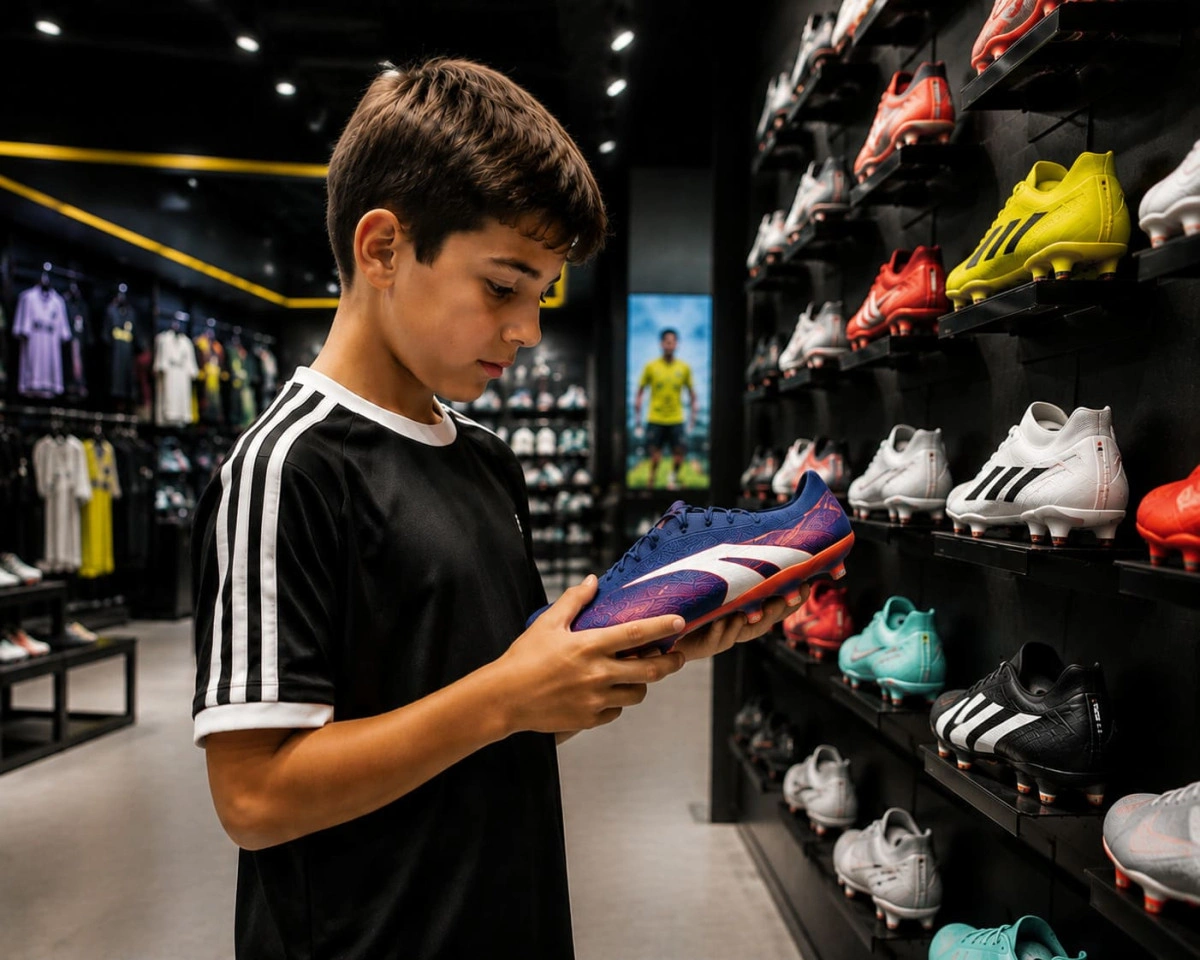
Choosing football boots for your kids may seem straightforward, but it isn’t always that simple. There are many models, many brands, different types of soles, sizes, materials and prices. What’s more, kids often know exactly what they want before their parents do: they want the boots worn by their favourite player or the ones that catch their eye because of their colour.
But to get it right, the most important thing isn’t to choose the prettiest or the most expensive pair. The key is to find boots that are comfortable, safe and suitable for the pitch where your kid plays.
Well-chosen boots can help them run better, turn more confidently, strike the ball comfortably and enjoy football more. Poorly chosen boots, on the other hand, can cause discomfort, a lack of stability, premature wear and tear, or even make them feel uncomfortable on the pitch.
First of all: the surface
Before looking at the design, brand or price, there’s one key question: what surface do they usually play on?
The outsole is one of the most important parts of a football boot. Not all boots are suitable for every pitch, and choosing the wrong outsole can cause a kid to slip, get stuck in the ground or cause the boot to wear out prematurely.
FG boots: natural grass
FG boots are designed for natural grass pitches. They usually have longer, more widely spaced studs, designed to penetrate the grass and provide traction on softer ground.
They are a good choice if your kid plays mainly on natural grass pitches, particularly if the pitch is in good condition.
The problem arises when they are used on artificial turf. On many artificial pitches, FG studs can put too much pressure on the sole of the foot and make walking less comfortable. Furthermore, they can wear out more quickly and are not always the safest option for children.
If your kid plays almost exclusively on artificial turf, it is usually better to look for a different type of sole.
-
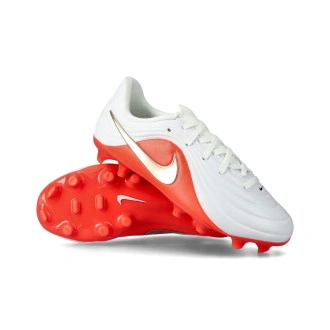
Football Boots Kids Tiempo Maestro Academy FG/MG White-Blur-Brt Crimson
€64.99Go to technical description -
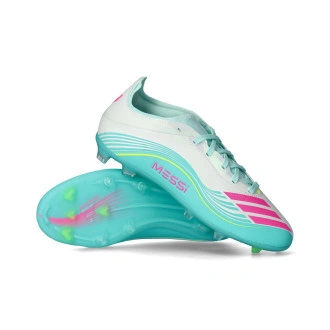
Football Boots Kids F50 Messi Elite FG White-Lucid Pink-Flash Aqua
-49%€129.99€65.99Go to technical description
AG boots: artificial grass
AG boots are designed for artificial turf. They are one of the best options for grassroots football, as many kids train and play on artificial pitches throughout the season.
This type of sole usually has more studs, which are shorter and better distributed across the sole. This helps to distribute pressure more evenly, improve stability and reduce the sensation of the studs digging in.
If your kid trains several times a week on artificial pitches, a pair of AG boots could be an excellent choice.
-
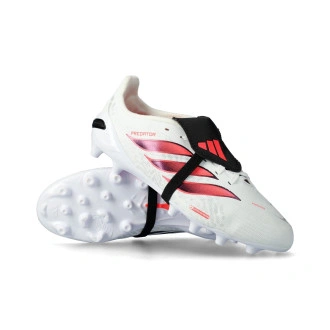
Football Boots Kids Predator League FT AG White-Tursol-Core Black
€74.99Go to technical description -
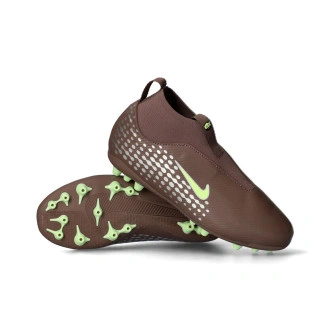
Football Boots Kids Air Zoom Mercurial Superfly 10 Academy AG KM Plum Eclipse - Mtlc Silver
-40%€79.99€47.99Go to technical description
FG/MG boots
FG/MG or multi-stud boots are designed to offer greater versatility. They can perform well on different types of surface, depending on the model.
They are a good option if your kid plays on a variety of pitches: artificial turf, natural grass or harder surfaces. For many parents, they are a very practical purchase because kids don’t always play on the same type of pitch.
They may not be the most specialised option for a single surface, but they can be a very well-balanced solution for grassroots football.
-
Football Boots Kids Tiempo Maestro Academy FG/MG White-Blur-Brt Crimson
€64.99Go to technical description -
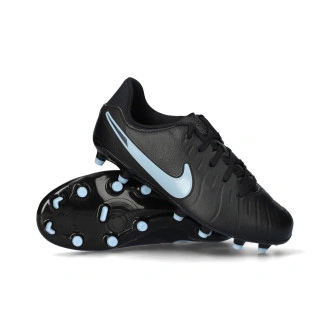
Football Boots Kids Tiempo Legend 10 Academy FG/MG Black-Black
-51%€64.99€31.99Go to technical description
Turf or carpet boots
Turf boots have lots of small rubber studs. They are designed for hard surfaces, carpet, five-a-side football pitches, very short artificial turf or old pitches.
They are comfortable, stable and gentler on the feet. For young kids or for training on hard pitches, they can be a highly recommended option.
If your kid plays on a very hard surface and you notice that they feel uncomfortable in boots with traditional studs, turf boots could be a great alternative.
-
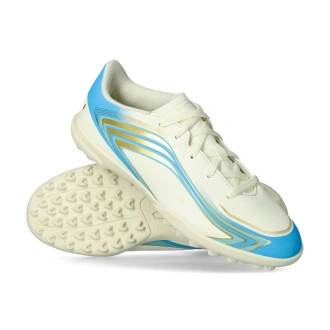
Football Boots Kids F50 Messi Club Turf Ivory-Semi Blue Burst-Icey Blue
€54.99Go to technical description -
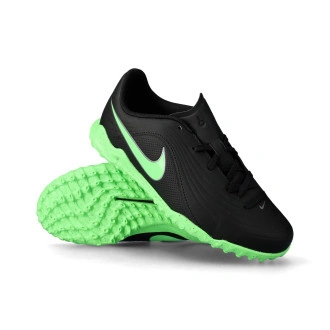
Football Boots Kids Tiempo Maestro Club Turf Black-Illusion-Green-Black
-20%€44.99€35.99Go to technical description
Don’t buy them just because of the design or the player wearing them
It’s normal for kids to want the boots worn by their favourite player. It’s part of the excitement of football. But just because a professional wears a particular pair of boots doesn’t mean they’re the best choice for every kid.
Before deciding on the colour or the player who wears them, you need to check the important factors: the playing surface, the size, the fit and the comfort.
A boot might look fantastic, but if the sole isn’t suitable for the pitch where your kid plays, it won’t be a good buy. And the same goes for the size: if they’re too big or too tight, your kid won’t be comfortable playing in them.
The design can be the final consideration. First, make sure the boot is right. Then, make sure they like it.
How to choose the correct size
Size is one of the issues that causes the most confusion. Many parents tend to buy a larger size so that the boot will last longer, but in football this can be a problem.
The boot should fit snugly, but not be too tight. The foot needs to be secure, without sliding around inside the boot, but the toes should not be squashed.
Ideally, there should be a little space at the toe, but not too much. If there is too much space, the child will lose control of the ball, have less stability when turning and may suffer from chafing.
Can I buy a size larger so it will last longer??
A little room is fine. Too much room, though, isn’t.
With kids, it’s natural to think about how their feet will grow, but a boot that’s too big can make them play less well and feel unsteady. In football, a good fit is very important because there are changes of direction, sudden stops, kicks and a lot of contact with the ball.
If the foot moves around inside the boot, the sense of control is greatly reduced. What’s more, blisters or discomfort may develop.
The best option is to choose a comfortable size, with a reasonable amount of room, but without the boot being too loose.

Check the size every few months
Kids grow quickly, and a boot that fitted perfectly at first may start to feel tight before long.
It’s a good idea to check the size every few months, especially if your kid trains several times a week. Some signs that they need a new size are:
- They complain of pain in their toes.
- New grazes appear.
- They find it difficult to put on or take off their boots.
- Their foot feels too tight at the toe.
- They look uncomfortable whilst playing or want to take them off when they’ve finished.
It’s also important to try the boots on with football socks, not thin everyday socks. The fit can change quite a lot.
Lace-up or laceless boots
Another common dilemma is whether to choose laced or slip-on boots. Both options can work well, but they feel different.
Lace-up boots
Lace-up boots allow for a better fit around the foot. They are a very safe option for kids because you can tighten them more or less depending on the shape of the foot.
They are also usually easier to adjust if the kid has a narrow or wide foot, or a higher instep.
For most kids, especially if they are still growing or aren’t yet sure what fit they prefer, lace-up boots are a very reliable choice.
Laceless boots
Lace-free boots have a cleaner design and are usually very popular with kids because they look like the ones worn by many professional players.
They are easy to put on if they fit well and provide a very clean feel when striking the ball. But be careful: if they don’t fit the foot properly, they can be less stable than laced boots.
For young kids, or those with very narrow feet, it’s best to try them on thoroughly before making a decision.
Materials: comfort, durability and touch
The material of the boot affects comfort, weight, durability and ball feel. There’s no need to overcomplicate things, but it’s worth understanding the basic differences.
Synthetic material
Synthetic boots are very common in kids' models. They are usually lightweight, durable, easy to clean and retain their shape quite well.
They are a good choice for kids who train a lot, play on artificial turf or need a boot that can withstand frequent use.
What’s more, many modern synthetic materials offer good ball feel without requiring too much maintenance.
Leather or soft materials
Boots made from natural leather or softer materials tend to mould very well to the foot. They feel comfortable and offer a very pleasant feel when handling the ball.
They can be a great option for children who prioritise comfort or who have slightly wider feet, as the material tends to stretch a little with use.
That said, they usually require a bit more care and may be less resistant to wear and tear than some synthetic materials.
Knit or textile materials
Some modern boots are made from textile or knitted materials. They tend to offer a more snug, lightweight and flexible fit.
They can be very comfortable, but it is important that they have reinforcements in the areas most prone to wear and tear if the kid plays a lot. In grassroots football, durability remains a key factor.

Boots according to age and level
Not all kids need the same type of boot. The choice also depends on their age, their ability and how often they play.
Beginners
If your kid is just starting out, the most important thing is that the boot is comfortable, durable and suitable for the surface.
There’s no need to choose a top-of-the-range model. When starting out, it’s usually best to go for a boot that’s easy to use, fits well, has the right sole and is reasonably priced.
The priority is for your kid to feel confident and enjoy playing.
Kids who train several times a week
If you train two, three or more times a week, durability becomes very important.
In this case, it’s best to look for a boot with good support, hard-wearing materials and a sole suited to the surface you play on. If you train on artificial turf, an AG or multi-stud sole could be a very good option.
It’s also advisable to check areas such as the toe and the sides carefully, as these tend to suffer a lot of wear and tear.
Kids taking part in competitions
If your child competes every weekend and is already at a more advanced level, you might want to consider boots that offer a better fit, are lighter and provide a better feel for the ball.
In this case, it may be worth moving up to a mid-range or high-end model, provided the boot is suitable for the surface they play on and that your kid looks after the equipment properly.
Even so, the most expensive boot isn’t always the best. The best one will be the one that suits their foot, their playing style and the pitch where they play.
Which boots to choose depending on their playing style
Playing style can also help you make up your mind. Although it’s not necessary to pigeonhole kids too much, it can serve as a guide.
If they are quick and play on the wing
If your kid is quick, likes to run into space, dribble and change pace, they might benefit from a lightweight boot with a good fit and good grip.
This type of player usually looks for a sense of speed, freedom of movement and a quick response when accelerating.
If they like to play, pass and control the ball
If they’re a more technical player who enjoy passing, controlling the ball and moving through the middle, you might be interested in a comfortable boot with good ball feel and a softer upper.
In this case, ball feel and comfort may be more important than finding the lightest possible boot.
If they play in defence or are more physical
If they play as a defender, centre-back or are a more physically powerful player, you should prioritise stability, durability and a secure grip.
A boot with a good structure, a suitable sole and durable materials can help them feel more confident during tackles, changes of direction and clearances.
Goalkeepers
Goalkeepers also need good boots. For them, traction, lateral stability and comfort are important.
A goalkeeper moves over short distances, shifts his weight sideways, makes quick rushes off his line and kicks the ball long. That’s why they needs a boot that gives them confidence and good grip without compromising mobility.
Entry-level, mid-range or high-end boots: is it worth paying more?
This is one of the most common questions. And the answer is: it depends on how it’s used.
Entry-level
Entry-level boots are a good choice for kids who are just starting out, play only occasionally or are still growing very quickly.
They are usually more affordable, durable and perfectly adequate for beginners. They don’t feature the most advanced technologies, but they can do the job perfectly well if chosen carefully.
-
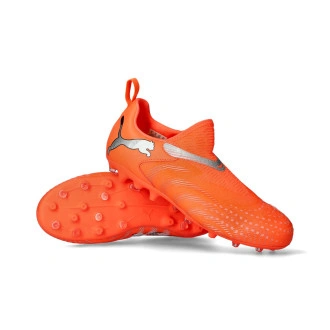
Football Boots Kids Future 9 Match LL MG Puma Red-Puma White-Glowing Red-Puma Black
-51%€64.99€31.99Go to technical description -
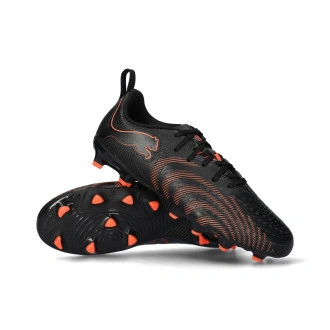
Football Boots Kids Future 9 Play FG/AG Puma Black-Glowing Red-Strong Gray
-50%€49.99€24.99Go to technical description
Mid-range
The mid-range is usually the most balanced option for many kids. It offers a better fit, greater comfort and higher-quality materials than an entry-level range, without costing as much as a professional boot.
It is a good choice for kids who train regularly and compete throughout the season.
-
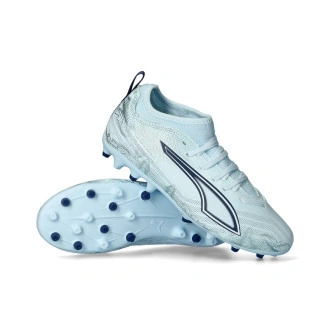
Football Boots Kids Ultra 6 Match MG Icy Blue-Blue Jewel
-15%€64.99€54.99Go to technical description -
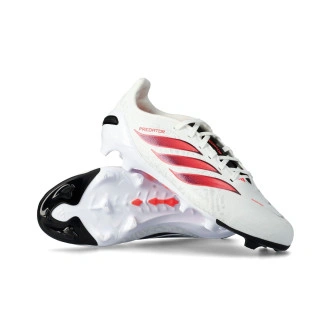
Football Boots Kids Predator League L FG White-Tursol-Core Black
-30%€69.99€48.99Go to technical description
High-end
Top-of-the-range boots offer more technical materials, are lighter, provide a better feel for the ball and have a more advanced fit.
They may be worth it for kids who compete, play a lot and look after their boots well. But they aren’t essential for everyone.
For many parents, a well-chosen mid-range pair will be the smartest buy.
-
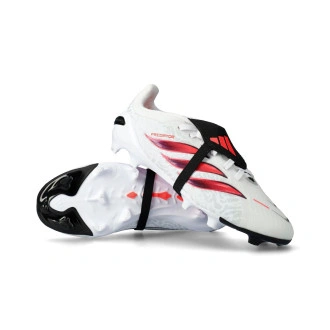
Football Boots Kids Predator Elite FT FG White-Tursol-Core Black
€129.99Go to technical description -
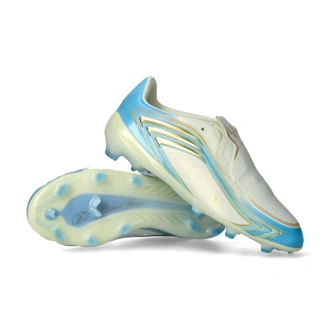
Football Boots Kids F50 Messi Elite FG Ivory-Semi Blue Burst-Icey Blue
-25%€129.99€97.99Go to technical description
How to look after boots so they last longer
Looking after your boots properly can significantly extend their lifespan, especially for kids who train several times a week.
After playing, it’s a good idea to remove any mud, rubber or grass with a damp cloth or a soft brush. It’s not advisable to put the boots in the washing machine, as this can damage the materials and the structure.
They should also not be dried in direct sunlight, on a radiator or with a hairdryer. It is best to leave them in a well-ventilated place and, if they are very wet, stuff some paper inside to help absorb the moisture.
It is also important to teach kids how to take their boots off properly. Stepping on the heel to remove them can cause them to lose their shape or damage the back of the boot.
And, above all, make sure each boot is used on the correct surface. An FG boot used constantly on artificial pitches may not last as long and may be less comfortable.
Common mistakes when buying kids' boots
One of the most common mistakes is buying a pair that’s too big in the hope that they’ll last longer. It might seem practical, but on the pitch it causes the kid to lose stability and control.
Another common mistake is choosing boots solely based on colour or the player who wears them. Design matters, but it shouldn’t take precedence over the sole, the size and comfort.
It’s also common to buy FG boots for playing on artificial turf. In many cases, an AG, MG or turf sole will be more suitable.
Another mistake is not taking the width of the foot into account. Some boots are narrower, whilst others are more comfortable for wider feet. If a kid complains of lateral pressure, it may not be a size issue, but rather a fit issue.
And finally, it’s not a good idea to use the same boots on every surface. Each sole is designed for a specific type of pitch.
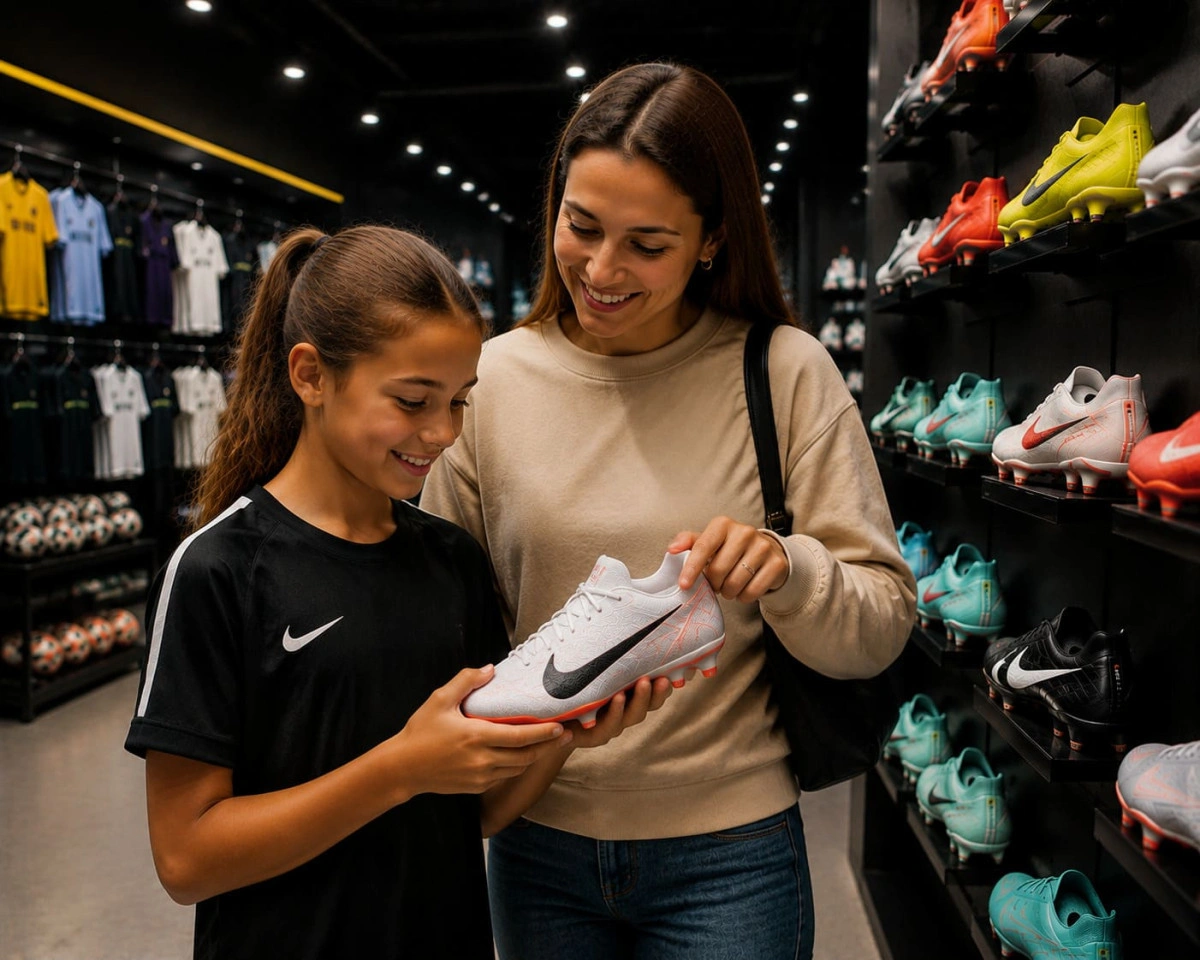
So then, which are the best boots for your kid?
The best football boots for your kid aren’t always the most expensive or the flashiest. They’re the ones that suit their foot, their age, the pitch they play on and how often they train.
If they play on artificial turf, prioritise a sole suitable for that surface. If they’re just starting out, look for comfort and durability. If they compete, you might want to consider a boot with a better fit and higher performance. And if they’re still growing, choose a size with a bit of room, but without the foot sliding around inside.
The best sign that you’ve made the right choice is simple: your kid plays comfortably, moves with confidence and forgets all about their boots during the match.
Find kids' boots at Fútbol Emotion
At Fútbol Emotion, you can find football boots for kids of all levels: models for beginners, training boots, options for artificial turf, natural grass, multi-stud or turf, and ranges designed for players who compete every week.
Choose the boots that best suit their pitch, their size and their playing style, and help them enjoy football in comfort and safety.
Discover kids' football boots at Fútbol Emotion.