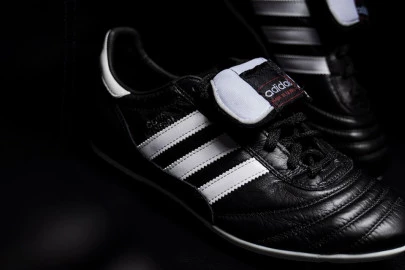
We know that these football boots are completely out of fashion, but in 2006 a range was launched that allowed you to change the studs depending on the surface you were going to play on. This was extremely innovative for its time, but it never really caught on. And we say it never really caught on because, quite simply, this technology hasn’t survived to the present day. Even so, it was a good idea, as it allowed footballers to have three different types of sole in a single boot for playing football: natural grass, artificial turf and even harder surfaces, such as clay, for example. Brands adapted to this trend and began manufacturing ranges that also allowed you to change the studs – the well-known SG or SG-PRO boots. We know that many of you, just like us, ended up swapping your aluminium studs for rubber ones so that you could use the boots on artificial turf. This was still possible until about three years ago, but it is no longer the case today for two reasons.

The first is that rubber studs suitable for boots designed for artificial turf are no longer manufactured, as the only models suitable for this type of surface are AG or AG-Pro boots, and neither of these allows the studs to be changed. The second reason is that the only boots that actually allow the studs to be changed are SG or SG-Pro boots. However, these boots are no longer manufactured with artificial turf in mind and are therefore not designed to withstand the abrasion caused by this type of pitch. At Fútbol Emotion, we would like to warn that using these boots on artificial turf or carpet can be harmful both to the player’s health and to the product itself; consequently, such use is not covered by the warranty.
What do we really need to know about the studs on football boots?
The first thing we need to be clear about is that, if we mainly play on artificial turf, we should only use AG boots. If we’re the sort of players who play on both natural and artificial turf, our best option is to go for a pair of Puma boots, as it’s the only brand that still produces ranges with FG/AG soles. If you don’t use boots from this brand, your best alternative is to buy two pairs: one FG and one AG. In this case, our advice would be to opt for a high-end boot for the surface you’ll be playing on most often and choose a mid-range or entry-level pair for the one you use less frequently.

However, if we only play on natural grass, what we need to know about our boots and how to get the most out of their soles and studs is fairly straightforward. If we buy mixed-ground boots – that is, those that allow the use of both rubber and aluminium studs – or even full SG boots, where all the studs are aluminium, we must bear in mind that we’ll need one set of rubber studs and another of aluminium ones. Why? Because the studs are what provide the stability and performance we’re looking for in our boots. However, depending on the condition of the pitch and the weather, you’ll achieve varying levels of performance. It all depends on which studs you choose for each situation.

In what different situations might we need to change the studs on our boots?
- Dry natural grass in good condition: rubber studs.
- Dry natural grass in poor condition: mixed studs (rubber and aluminium).
- Wet natural grass in good condition: mixed studs (rubber and aluminium).
- Damp natural grass in poor condition: aluminium studs.

However, if you’re a fan of this type of boot and want to keep playing in them, at Fútbol Emotion you’ll find a wide range of additional stud sets that you can use with your boots. Bear in mind, though, that not all of them are compatible with every boot model. If you have any queries, please don’t hesitate to contact us and we’ll help you choose the most suitable studs for your boots.