Just over a month ago, Nike launched the new generation of Mercurials, leaving everyone speechless. There have been many new features, both in terms of design and functionality, and today we’ll be discussing the redesign of the outsole and, more specifically, all the different types offered by Nike.
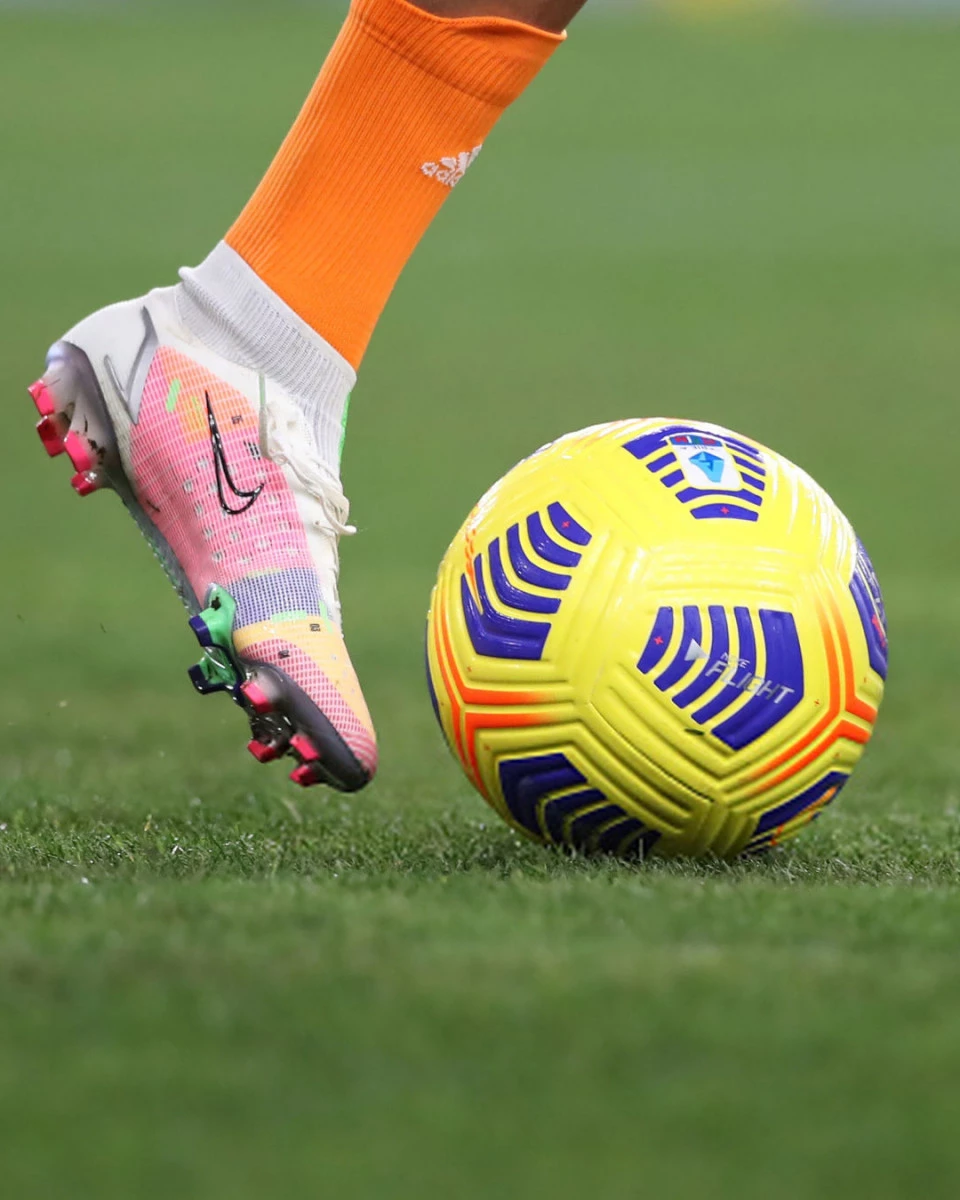
FG SOLE
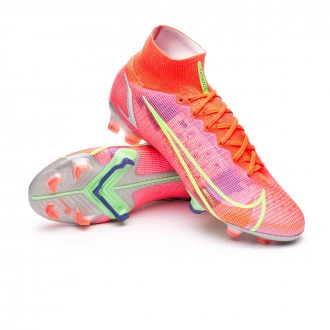
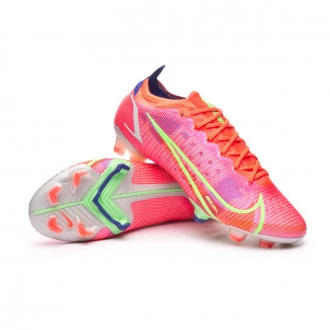
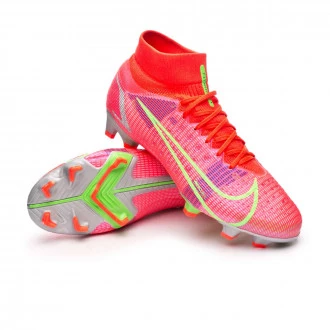
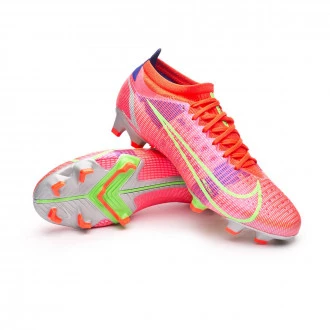
Let’s start with what is probably the most widely used stud pattern of all: FG, which stands for ‘firm ground’, so it’s designed for stable, dry ground that isn’t too slippery.
Where can we use it? It’s very simple: on state-of-the-art synthetic pitches, which already have characteristics very similar to natural grass, and also on natural grass pitches that aren’t too muddy – in other words, those that are well looked after and regularly maintained.
But what has changed compared to the previous generation? The key feature that stands out in this new generation is the bridge connecting the front and rear plates, a sort of backbone that provides stability without compromising the lightness so characteristic of the Mercurial sole.
The stud configuration remains the same: 4 studs on the rear plate and 7 on the front, all laminated and arrow-shaped to provide better grip and enable faster acceleration and more agile changes of direction.
SG ANTICLOG SOLE
-
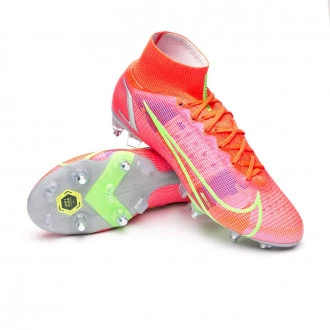
Football Boots Mercurial Superfly 8 Elite SG-Pro Anti-Clog Bright Crimson-Metallic Silver-Indigo Burst
-46%€279.99€149.99Go to technical description -
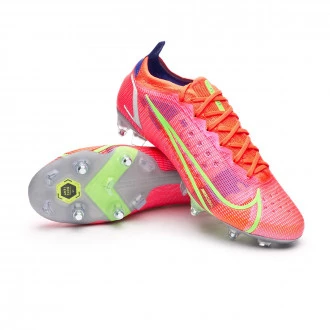
Football Boots Mercurial Vapor 14 Elite SG-Pro Anti-Clog Bright Crimson-Metallic Silver-Indigo Burst
-29%€259.99€184.99Go to technical description
Let’s now turn to what is perhaps the most widely used sole among professionals: the one featuring aluminium studs for better grip on natural grass. It is precisely on these pitches that it performs at its best: a natural grass pitch where the studs must penetrate the ground properly, otherwise there will be no stability.
The stud layout is the same as on the forefoot, but as we mentioned, it features a mix of studs: 4 aluminium ones, which are non-removable, and the rest made of plastic.
But what does Nike offer with this sole that other brands don’t? The SG sole is usually made up of aluminium studs, but as you may have noticed, Nike refers to it as SG Anticlog. We’ll see exactly what that’s all about in a moment.
Anticlog technology ensures that the ground doesn’t stick to the boot, keeping it responsive and functional at all times. The problem with many boots featuring aluminium studs arises when dirt sticks to the sole plate, flattening it and causing a loss of grip on the pitch, but Nike eliminates this issue with this latest technology.
AG SOLE
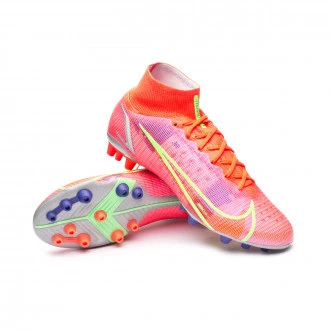
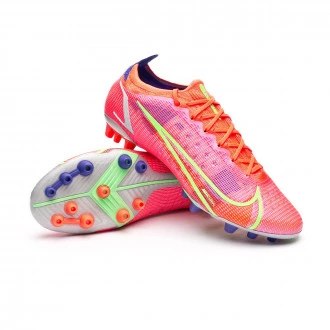
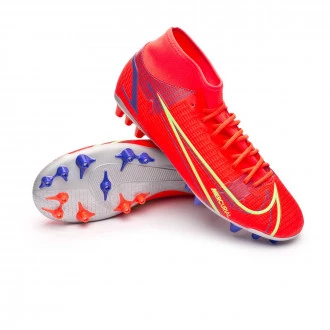
Moving on to the AG sole, perhaps the least used of the three. We should point out that our presenters aren’t particularly keen on this sole and have used it very few times.
The main difference compared to the other two is, without a doubt, the height—which is much lower—and its shape. We can see how Nike has gone back to basics, opting for round studs with a small hole in the centre. Furthermore, we note the presence of a greater number of studs compared to the other two soles; in fact, the AG sole has 17 studs distributed practically across the entire surface to distribute weight more effectively.
The AG sole, Artificial Ground, is designed for use on first-generation artificial turf pitches, which have a high level of abrasion and limited surface area for support.

.png)