In today’s post, we’re going to take a look at the technologies that, over the years, have made their mark on history and transformed football boots. We’ll explore how we’ve arrived at the products we have today. Many of us think this evolution was inevitable, but we mustn’t take for granted the entire process that has brought us this far. In a relatively short space of time, football boots have undergone a huge technological evolution.

One of the first major changes came with the football boots; whereas they used to be made of wood, aluminium and other materials are now used. The story is quite an interesting one: the first aluminium boots were used in a World Cup final in which Germany and Hungary were competing for the World Cup. Until then, boots had been made of wood, but the ingenious Adi Dassler, founder of adidas, suggested to the German national team that they play that final in aluminium boots. The Germans accepted the proposal and went on to win the match, partly thanks to these boots, which allowed them to adapt better to the conditions on the pitch.

The second piece of technology we’d like to tell you about also features in an adidas football boot. During the World Cup in the United States, the brand launched a revolutionary pair of boots, the likes of which had never been seen before: the adidas Predator Element, which incorporated rubber panels on the forefoot. Thanks to players who wore them during that World Cup, such as Zidane and Beckham, the Predator became a symbol of the German brand – an identity we can still recognise in the latest models, such as the adidas Predator 20+. Although this technology didn’t go down too well at first, it gradually went on to become a benchmark in the world of football.
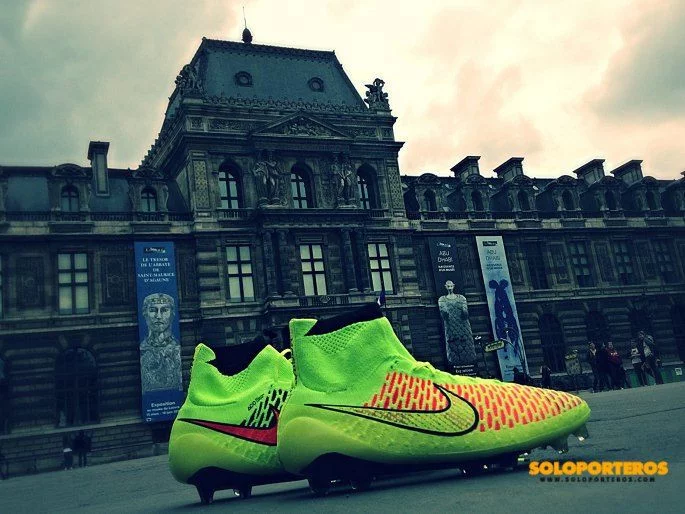
One of the innovations that most surprised and won over the public was, without a doubt, the introduction of boots with an upper made from a special fabric. We first saw them from Nike, specifically the Nike Magista, which featured Flyknit technology and the Dynamic Fit collar, designed to offer a sock-like fit. These Nike football boots were a huge hit and, from that moment on, the manufacture of football boots changed completely. Today, many boots are made using this type of material, which remains one of the most popular amongst players. Many of us would love to see a new Magista collection, but, for now, Nike has yet to grant us that wish.

The latest technology we’re going to talk about today is that of laceless football boots, a type of footwear that has now become commonplace and is being used by more and more players. Once again, adidas was one of the brands to embrace this innovation with the adidas ACE 16.1, boots that won over many professional footballers, such as Özil and Rakitić, who started wearing them right from the start.
However, in reality, the first laceless football boots were not designed or launched by adidas, but by Lotto, to coincide with the 2006 World Cup. Despite being an innovative concept, they failed to achieve the success that had been hoped for.