What is the Super League?
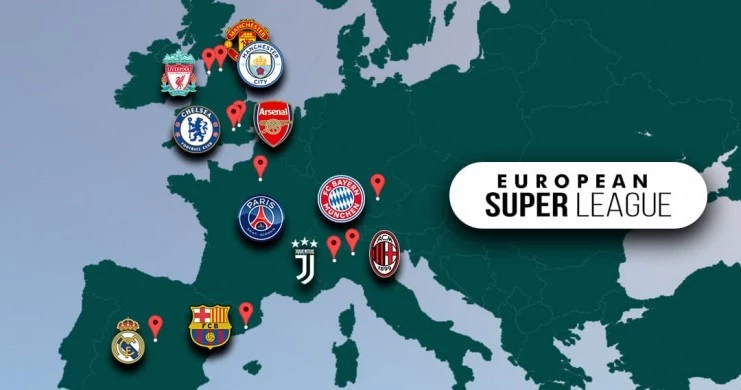
Let’s briefly explain what this new competition is and how it is structured. It is a private tournament comprising 20 teams: 15 permanent members that will not change over time, and a further 5 that will qualify on sporting merit. It is a competition that excludes the majority of clubs, making it almost impossible for them to take part. The Super League has been created by some of the most influential presidents in modern football, such as Florentino Pérez and Agnelli, who are the main founders, but also those who will set the rules for this competition.
This alternative Champions League would consist of two groups of 10 teams competing against each other in a league format, with home and away matches. The top three teams from each group would progress to the knockout stages, whilst the fourth and fifth-placed teams would play a sort of play-off to remain in the competition. Matches would be played during the week, except for the final, which would take place at a neutral venue over the weekend.
Pros and cons

Naturally, this new format has sparked a great deal of debate, highlighting both its positive and negative aspects. Let’s look at some of the potential advantages:
- All matches would be of a very high technical standard, as the best teams would be taking part, thereby enhancing the spectacle for fans.
- There would be many more matches: in the current Champions League, a team can play a maximum of 13 matches if it reaches the final, whereas in this format the minimum would be 18 and the maximum 25.
- The founding clubs would experience enormous financial growth, which in theory would also benefit the smaller clubs.
- The new format is more appealing than the current Champions League, with larger groups and more matches.
Let us now turn to the negative aspects of the Super League:
- Smaller teams would have less scope for growth, as it would be a closed and exclusive competition. A modest club would no longer be able to aspire to grow and compete with the big clubs.
- The unexpected feats that we love so much, such as Atalanta, Ajax or Leipzig going far in demanding competitions, would disappear.
- A wider economic gap would be created between the richest clubs and the less powerful ones.
- The essence of sport and football would be lost: believing in dreams and the impossible.
- Players taking part in this competition might not be able to play in tournaments with their national teams, such as the European Championship or the World Cup.
What's going on now?
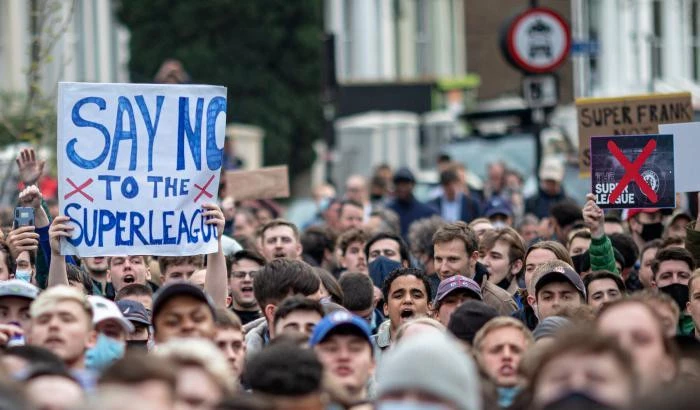
Following the announcement of the Super League, the football world paused to reflect. Most fans and players did not take kindly to this competition. In England, there were even demonstrations to stop what many called “the end of football”. The pressure led the founding English clubs (Manchester City, Manchester United, Tottenham, Chelsea, Arsenal and Liverpool) to abandon the project, which also led to the departure of the Italian clubs Inter and Milan.
So where does that leave us now? Well, the Spanish clubs and Juventus still firmly believe in the project and see it as a possible solution for football. They will continue to try to push the Super League forward, perhaps tweaking some of the rules to keep everyone happy.
What about you? What’s your take on this? Have your say in the comments!
.jpg)