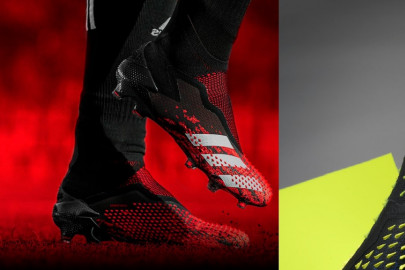
Foam
Let’s start by talking about a groundbreaking technology in football boots, which is used in the soles, the inner linings and even as reinforcement for the striking elements, as seen in several generations of the adidas Predator football boots. The foam is a high-density material that retains its shape (it’s the same technology used in pillows) and provides cushioning and comfort. This technology, although many of you might think it stems from an evolution of ordinary foam, comes directly from NASA – yes, friends, from NASA. It was in 1966 that NASA released this technology for public use, as until then it had been for their exclusive use. Of course, the technology has evolved and is now very different from the version released in 1966. Nevertheless, I still find it quite impressive.
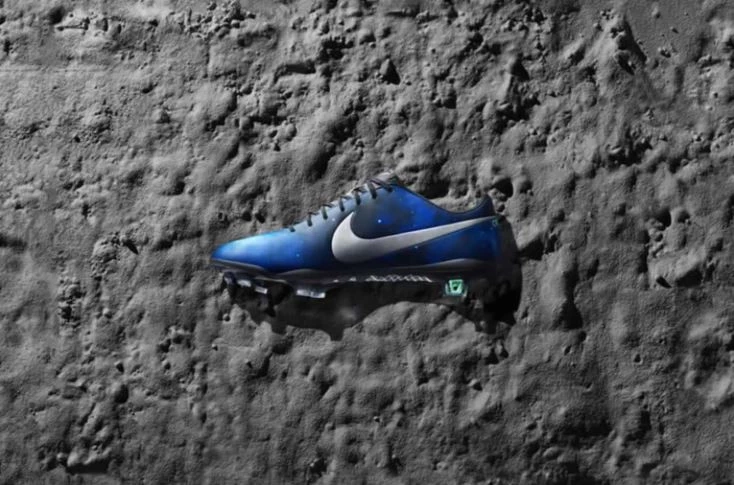
Knit
Although there is much debate over which brand was the first to develop a knitted football boot, the fact is that it was Nike football boots that brought the technology to the world of football in 2014 with the launch of the Nike Magista. But where does this technology come from? It comes from running, and it was in 2012 that the American brand unveiled the first functional model of high-performance trainers made entirely from Flyknit. A milestone that, with the Olympic Games that same year, revolutionised the world of footwear, as the result was simply incredible. Following this outstanding performance, Nike’s Flyknit was introduced into basketball, football and skate shoes, marking a major technological breakthrough for the Swoosh brand. Today, the evolved Flyknit remains a part of our lives and is in excellent form, with the Nike Mercurial being a prime example of this.
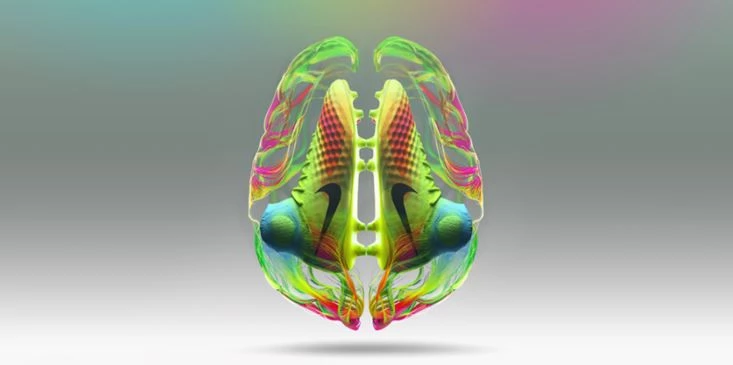
Sole
Although football boots today may look relatively similar to those developed over 20 years ago, the reality is quite different. Firstly, PU soles have been discarded in favour of much lighter soles, resulting in truly ridiculous weights. It was in 2008 that we saw the full-scale explosion of carbon fibre, with the Mercurial SL, and this trend continues to the present day with adidas’ Carbitex in the adidas X Ghosted football boots. The stud configuration has also changed, becoming much more anatomical and functional, as we see once again in the Nike Mercurial models—a feature we’ve inherited directly from running, where the focus is on cushioning and, of course, the foot-to-shoe fit. However, one of the major changes was the inclusion of Pebax as the material for manufacturing football boot soles. Pebax is a material derived from thermoplastic elastomers and is a blend of rubber and plastics that helps maintain the responsiveness and durability of football soles. Its origins date back to the mid-20th century – a real relic in your 2021 football boots.
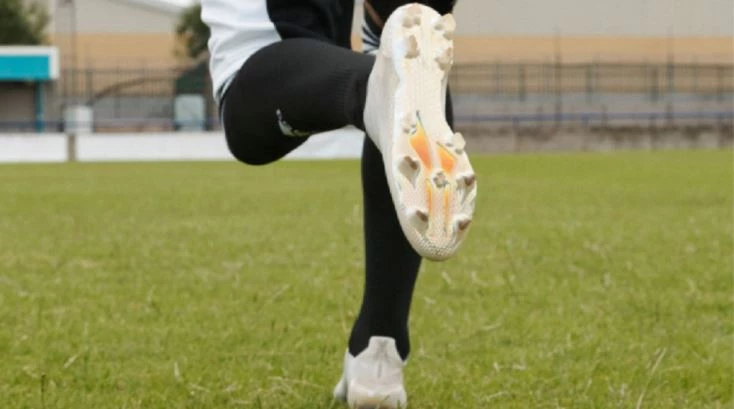
And this is just a glimpse into the origins of the various technologies we see on our feet during every training session; whilst their origins are completely different and sometimes have little to do with football, as we have seen, they deliver simply phenomenal results. Will we see any other technologies applied to football in the coming months?